BENEFITS & PROPERTIES
Friction Angle & Stability
High internal friction helps provide stable structural fill performance.
Enviro-Rock’s rough, angular particles interlock when placed and compacted, creating internal friction within the aggregate mass. This helps the material resist lateral movement and maintain stability in structural fill, retaining-wall, slope, and embankment applications.
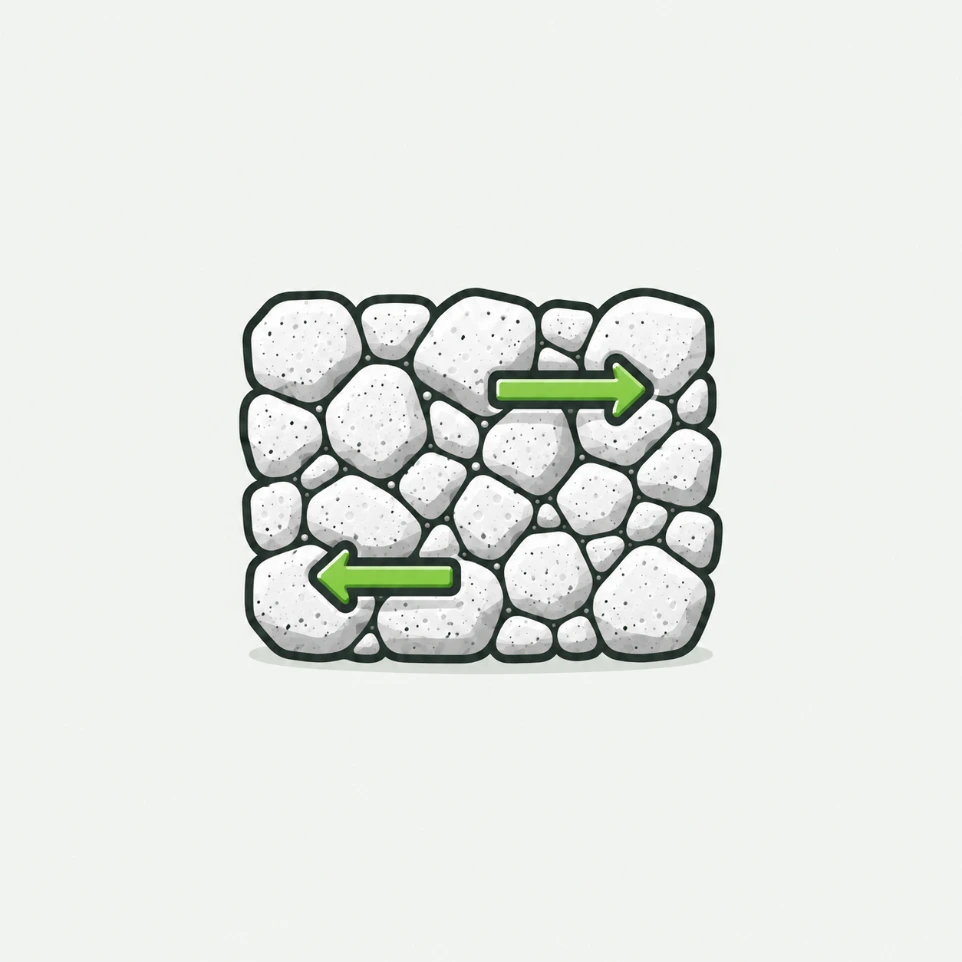
Shear Resistance
Internal friction and particle interlock help resist sliding within the aggregate mass.
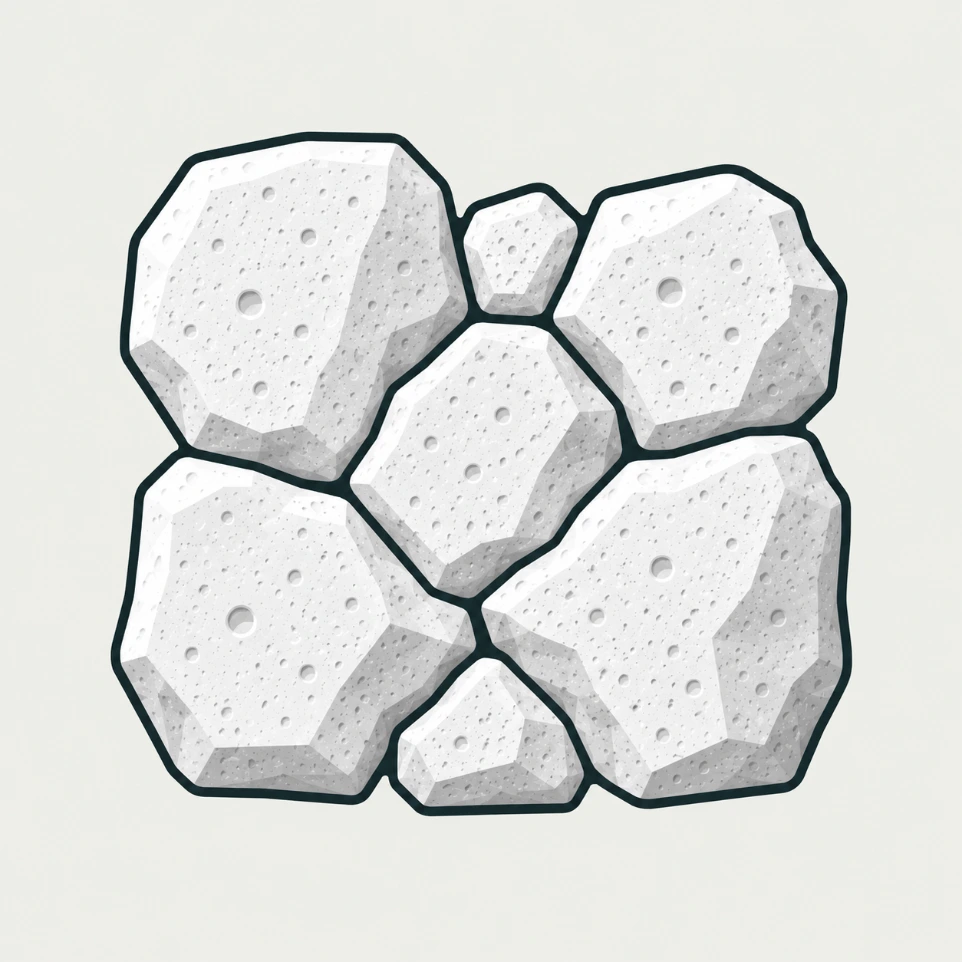
Angular Particle Interlock
Angular particles engage with one another, creating mechanical interlock within the compacted fill.
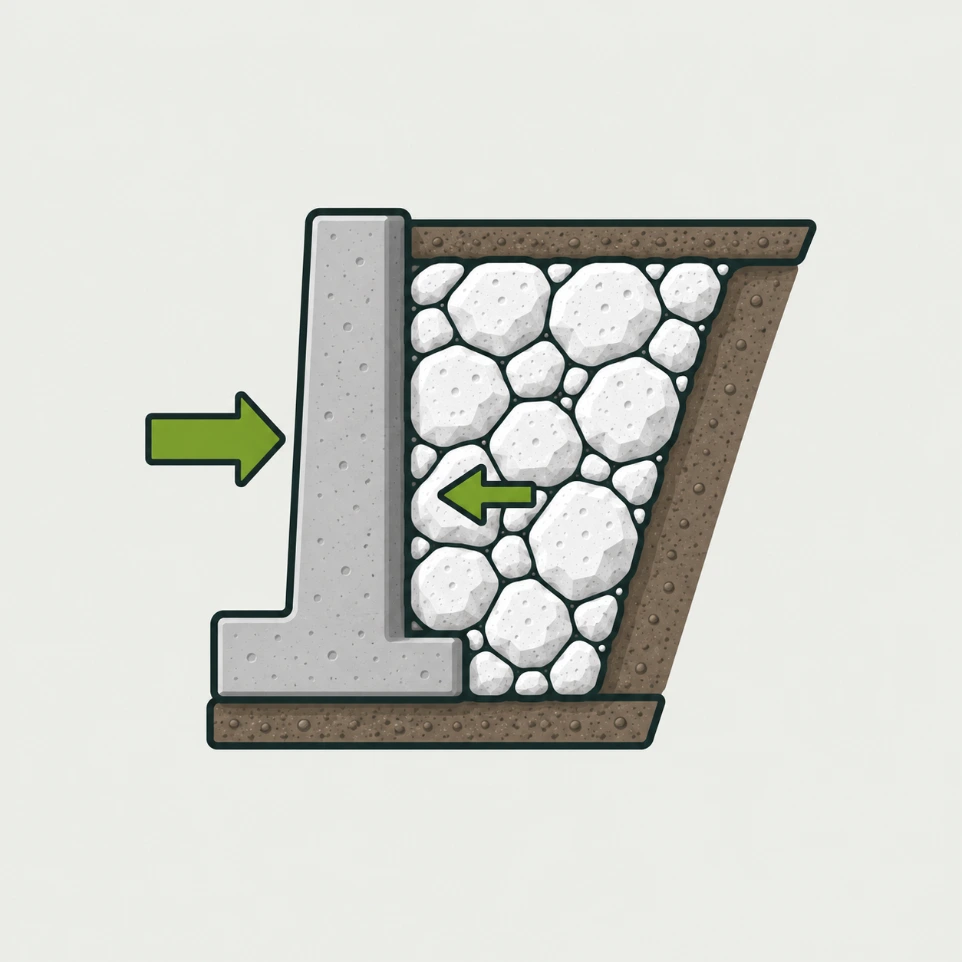
Supports Lateral Stability
High friction can help resist sliding and lateral movement in retaining and embankment applications.
Why Friction Angle Matters
The internal friction angle of a granular fill influences how well the material resists sliding, lateral movement, and deformation under load.
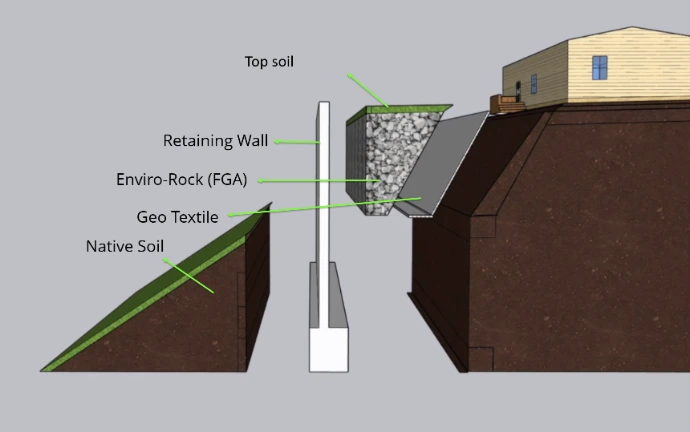
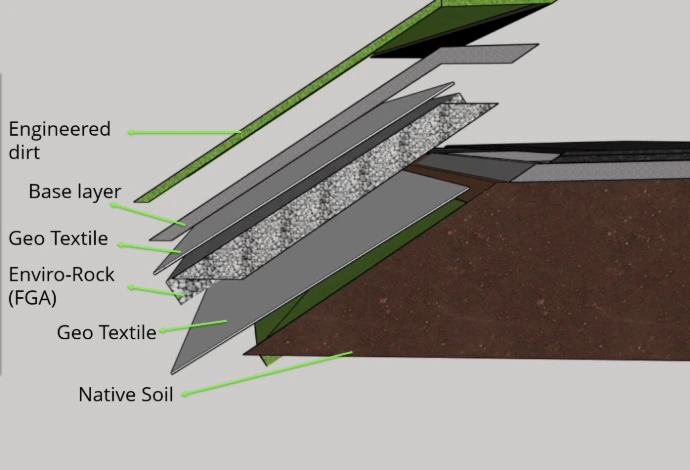
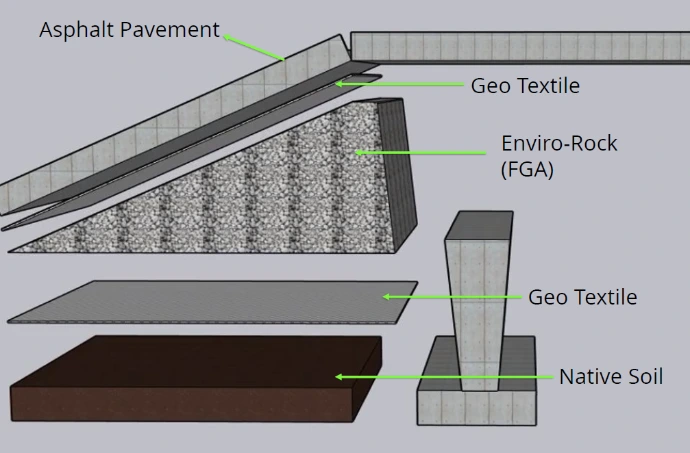
Enviro-Rock’s angular foam-glass particles develop mechanical interlock when placed together, helping create a stable granular mass. This makes friction and particle interaction important design considerations in retaining structures, slopes, embankments, and other structural-fill applications.
Where friction angle is used in design calculations, project-specific values should be confirmed by the geotechnical engineer using applicable test data and design conditions.
Enviro-Rock’s angular foam-glass particles develop mechanical interlock when placed together, helping create a stable granular mass. This makes friction and particle interaction important design considerations in retaining structures, slopes, embankments, and other structural-fill applications.
Where friction angle is used in design calculations, project-specific values should be confirmed by the geotechnical engineer using applicable test data and design conditions.
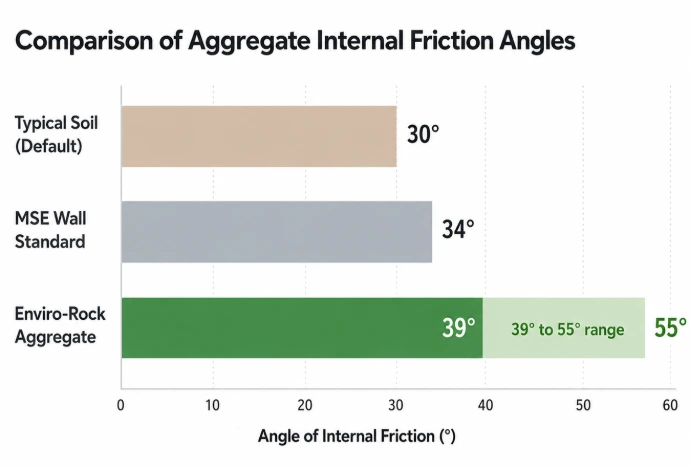
Where Friction Angle & Stability Makes a Difference

Request Test Results →
Review Enviro-Rock friction, interface, and structural performance data
related to lightweight fill and retaining applications.
──────────────────────────────────────────────────────────────────────────────────────────────────────────────────────────────────
Explore Related Properties
Structural Capacity → Lightweight → Drainage & Permeability →
Review Enviro-Rock friction, interface, and structural performance data
related to lightweight fill and retaining applications.
──────────────────────────────────────────────────────────────────────────────────────────────────────────────────────────────────
Explore Related Properties
Structural Capacity → Lightweight → Drainage & Permeability →