BENEFITS & PROPERTIES
Radon Gas Mitigation
Open voids create a highly permeable layer for sub-slab gas collection and depressurization.
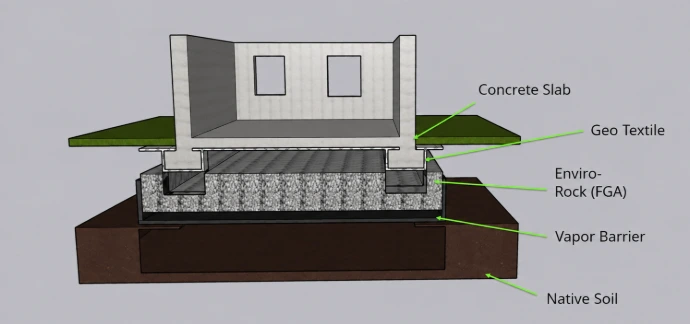
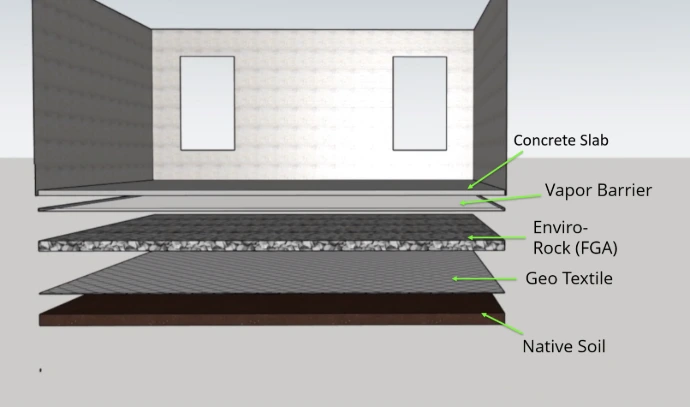
Enviro-Rock’s open-graded structure creates interconnected pathways beneath slabs, allowing soil gases such as radon to move freely toward collection piping or a depressurization system. Its foam-glass particles provide the structural fill layer while supporting below-grade radon-control strategies.
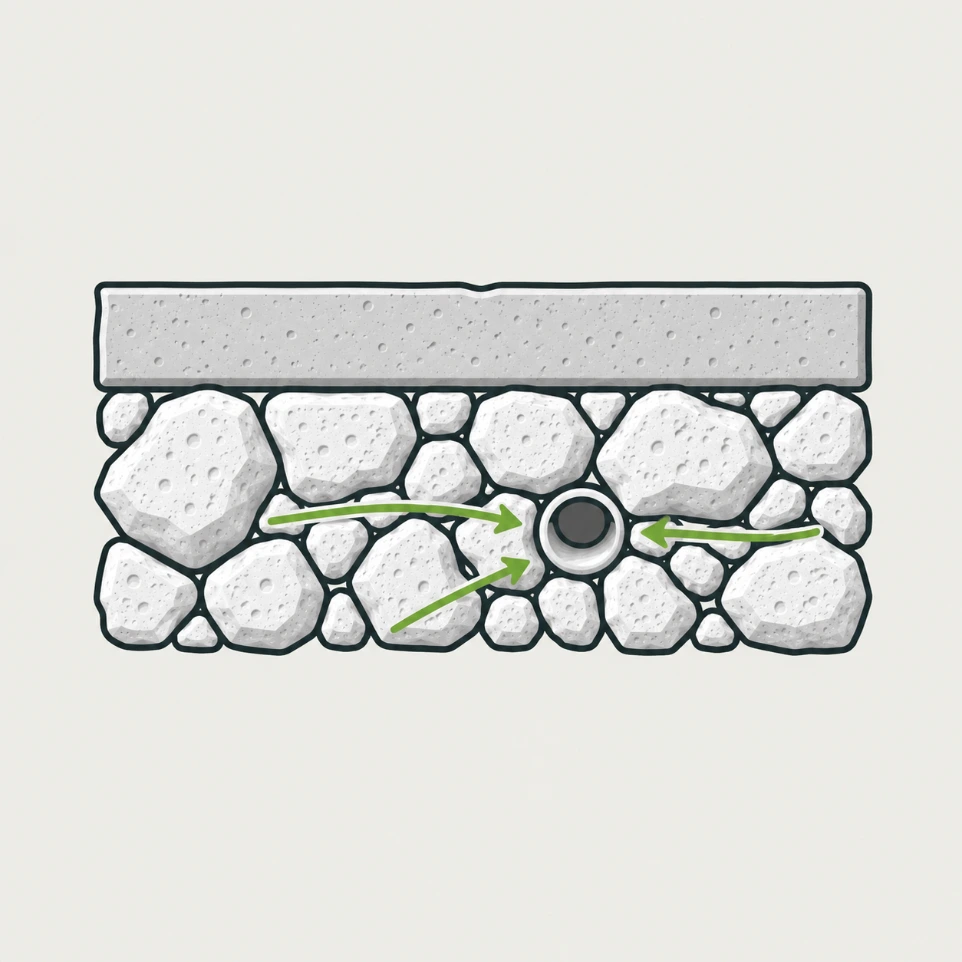
Sub-Slab Gas Control
The permeable aggregate layer helps direct soil gas toward a collection point beneath the slab.
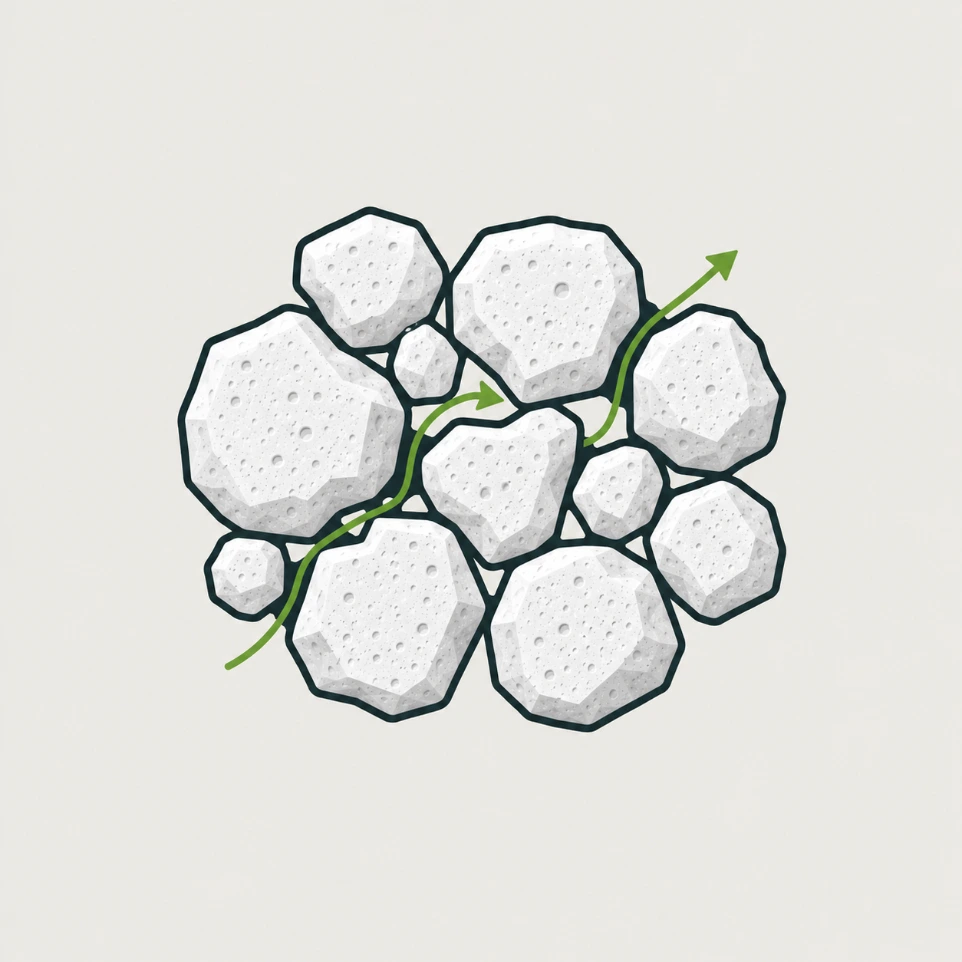
Interconnected Gas Pathways
Open void spaces between particles create continuous pathways for soil-gas movement.
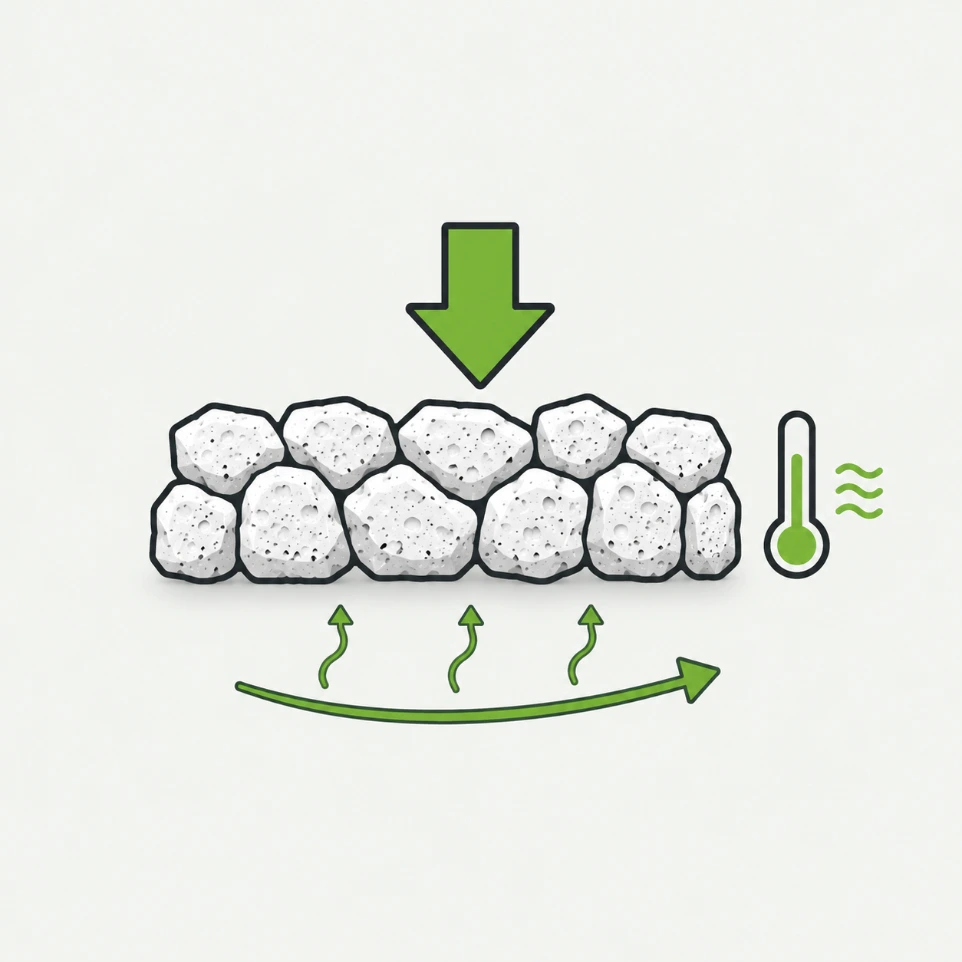
Multi-Function layer
Provides structural support, thermal insulation, and soil-gas permeability in one layer.
Why Radon Gas Mitigation Matters
Radon can enter buildings through cracks, joints, service penetrations, and other openings where the structure contacts the ground.
A permeable sub-slab layer allows soil gases to move laterally toward a collection point rather than relying on isolated pockets beneath the slab. Enviro-Rock’s interconnected void structure can provide this gas-collection layer while also serving as lightweight structural fill.
Where active or passive radon-control systems are required, the complete assembly—including piping, sealing, membranes, and ventilation—should be designed in accordance with applicable building-code and project requirements.
A permeable sub-slab layer allows soil gases to move laterally toward a collection point rather than relying on isolated pockets beneath the slab. Enviro-Rock’s interconnected void structure can provide this gas-collection layer while also serving as lightweight structural fill.
Where active or passive radon-control systems are required, the complete assembly—including piping, sealing, membranes, and ventilation—should be designed in accordance with applicable building-code and project requirements.
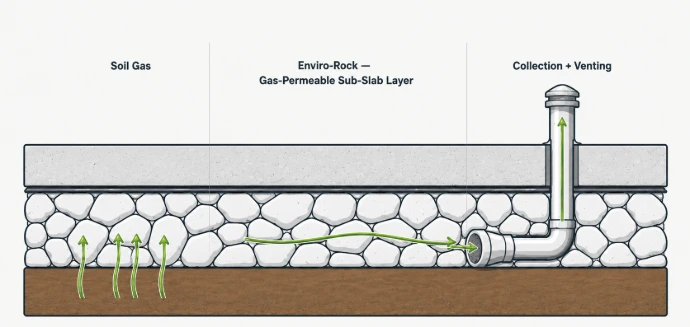
Where Radon Gas Mitigation Makes a Difference

Request Test Results →
Review Enviro-Rock void-space, gas-flow, material-structure, and
supporting technical data relevant to sub-slab radon-control applications.
──────────────────────────────────────────────────────────────────────────────────────────────────────────────────────────────────
Explore Related Properties
Drainage & Permeability→ Closed-Cell Structure→ Structure Capacity→
Review Enviro-Rock void-space, gas-flow, material-structure, and
supporting technical data relevant to sub-slab radon-control applications.
──────────────────────────────────────────────────────────────────────────────────────────────────────────────────────────────────
Explore Related Properties
Drainage & Permeability→ Closed-Cell Structure→ Structure Capacity→